
Somewhere in the last few years, "how much does a new system cost?" stopped having a simple answer.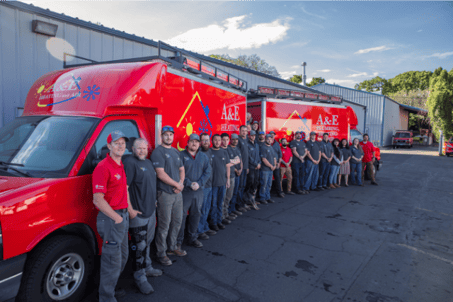 We hear it constantly — from homeowners in Gresham who've been putting off a replacement, from folks out in The Dalles watching an aging unit struggle through triple-digit summers, from people along the Gorge who got a quote, nearly fell out of their chair, and called us to ask if that number was real.
It's real. And you deserve to know why.
We're not going to tell you it's just inflation and leave it there. That's a non-answer. What's actually happened to HVAC pricing over the last five or six years is a pile-up of separate forces that all hit at once — and most homeowners have never had any of them explained clearly. We're going to fix that.
We Get Asked About HVAC Prices Every Single Week. Here's the Honest Answer.
Before we get into the why, here's the reality we work with on the ground:
A straightforward central air or heat pump replacement that ran $6,000–$7,000 installed in 2019 or 2020 is coming in at $9,500 to $13,000 or more today for comparable equipment. That's not because local contractors got greedy. Some of the increase is baked into every component before it even leaves the manufacturer. Some of it is labor. Some of it is market consolidation that most homeowners never see coming.
Understanding where the money actually goes is the first step toward not overpaying.
The Refrigerant Nobody Warned Homeowners About
If there's one thing driving equipment prices right now that most people have never heard of, it's the refrigerant transition.
For about two decades, every residential air conditioner and heat pump in the country ran on R-410A. It worked. It was well understood. Techs knew it, equipment was designed around it. Then EPA and federal regulations under the AIM Act started phasing it out because R-410A has an extremely high Global Warming Potential — meaning if it leaks, it's rough on the atmosphere.
The replacement is R-454B, which has about 78% lower environmental impact. Good. But R-454B is mildly flammable, which means manufacturers had to redesign safety components, add leak detection, change manufacturing processes, and retrain their entire supply chain. That cost doesn't disappear. It moves into the price of the unit you buy.
Industry estimates put the refrigerant transition alone at a 10–30% increase in equipment cost. That's before a single person touches your house.
The refrigerant itself is also more expensive to produce right now — manufacturing capacity is still catching up to demand. It will get cheaper as production scales, but that takes time, and it doesn't help anyone whose system gave out last August.
Speaking of which: if you were anywhere between Cascade Locks and The Dalles during a stretch of 105-degree days and your AC was running on borrowed time, you already know this isn't theoretical.
The Equipment You Can Buy Today Didn't Exist Five Years Ago
In January 2023, the federal government raised the minimum efficiency floor for residential HVAC equipment. The old SEER rating system got replaced by SEER2 — a stricter testing standard that reflects how systems actually perform installed in a real home, not just in a lab.
What this means practically: the cheapest system available today is more capable than a mid-range unit from 2019. That's genuinely good news for your energy bills. But better compressors, larger coils, smarter controls, and re-engineered airflow paths cost more to build.
A lot of customers get confused when they see SEER2 numbers and compare them to their old unit's SEER rating. If your old system was 13 SEER and a new one says 14.3 SEER2, those aren't apples to apples. The SEER2 test is harder to score on. A 14.3 SEER2 unit performs roughly like a 15 SEER unit under the old standard. The label changed, not the capability.
The rough cost impact of the new standards — better compressors, bigger coils, updated electronics — adds somewhere between $500 and $1,500 per system compared to what was being built before the change.
Copper, Steel, and Aluminum All Got More Expensive
An HVAC system is, at its core, metal. Copper, aluminum, steel — those three materials make up most of what you're paying for when you buy a unit. All three have seen meaningful price increases since 2020, driven by global demand, supply constraints, and ongoing tariffs on imported materials and overseas-manufactured components.
There's no workaround for this. When the metal costs more, the box it goes into costs more. Add shipping costs that spiked during the supply chain disruptions and never fully came back down, and you've got a compounding effect that shows up in every quote you receive.
There Aren't Enough Technicians — And That's Not Changing Fast
Experienced techs are retiring faster than new ones are coming up, and the training required for modern systems — inverter compressors, A2L refrigerant handling, communicating controls — is more involved than it was for older equipment.
Labor runs 40 to 60 percent of what you pay on an installation job. It's not just the time your technician spends at your house — it's the truck, the licensing, the insurance, the callbacks, the warranty work. When labor costs go up 5 to 8 percent year over year (which they have, consistently), that shows up in your total quote even if the equipment price hadn't moved at all.
During a heat wave in The Dalles or a cold snap that drops into the teens east of the mountains, the wait for a technician gets longer and the urgency gets more expensive. That's supply and demand working in real time.
Big Money Has Been Buying Up Local HVAC Companies
This last one doesn't get talked about enough, and it's worth knowing before you call around for quotes.
Over the past several years, private equity firms have been buying up small and mid-sized HVAC contractors across the country and rolling them into larger regional or national platforms. The Gresham and Portland metro area has not been immune to this. You might call a company that looks local, has a local name, and sends a truck with a local logo — and it's actually owned by an investment group that has no particular connection to this area.
The way these companies make money is by increasing margins. That shows up as: pushing you toward premium-tier equipment whether you need it or not, adding maintenance contracts and service plans to every proposal, and training salespeople to create urgency. None of that is necessarily illegal. But it does mean the quote you get is shaped by a revenue target, not by what your home actually needs.
This is the main reason we tell people to get at least three quotes. The spread on the same job can easily be $3,000 to $5,000 depending on who's quoting it, and that gap usually has nothing to do with the equipment.
What All of This Adds Up To
Put it together and here's roughly what's changed since 2020 on a typical residential installation:
-
Refrigerant transition: $600–$2,400 added to equipment cost
-
New efficiency standards: $500–$1,500 in better components
-
Materials and tariffs: $400–$1,200 in raw material costs
-
Labor increases: $400–$1,000 based on ongoing annual increases
-
Shipping and overhead: $300–$800
A system that was $7,000 installed five years ago is $9,500 to $14,000 today for comparable quality. Most of that increase is structural — it happened because the industry changed, not because any single contractor decided to pad margins.
The Oregon/Washington Incentives Are Worth Your Attention
If you're a Portland General Electric customer in Gresham or a Pacific Power customer out toward Hood River and The Dalles, you have access to Energy Trust of Oregon rebates that can be substantial — often $1,000 to $2,000 or more on qualifying heat pump equipment. These stack with the federal Section 25C tax credit, which offers up to $2,000 per year for qualifying Energy Star heat pumps.
For income-qualifying households, the Inflation Reduction Act's point-of-sale rebates go even further — up to $8,000 on heat pump equipment as those programs roll out.
We help our customers navigate this. It's not always simple paperwork, and the qualifying equipment list matters. But it's real money, and leaving it on the table because the process felt complicated is a shame.
Sizing Is More Important Than Brand
One thing we see constantly: people talk a lot about brand and efficiency rating and not nearly enough about whether the system is actually sized for their home. An oversized unit short-cycles, wears out faster, and doesn't pull humidity the way it should. An undersized unit runs constantly and can't keep up when The Dalles hits 108.
The right way to size a system is a Manual J load calculation — a real analysis of your home's square footage, insulation, windows, orientation, and local climate. It takes more time than a rule-of-thumb guess. We do it because putting in the wrong size system is the most expensive mistake in this whole process, and it's entirely avoidable.
The climate variation in our service area makes this especially important. A home in Gresham has fundamentally different heating and cooling demands than one in The Dalles or up a hillside in the Gorge. Cookie-cutter sizing doesn't work here.
Don't Let Anyone Skip the Math on Efficiency
A higher-efficiency system costs more upfront. Whether it pays for itself depends on your electricity rates, how hard the system works in your climate, and how long you stay in the home. For a lot of people in this area, a mid-efficiency heat pump with a good Energy Trust rebate is a smarter financial decision than the top-of-the-line unit without one. We'll show you the payback math before you decide — and we're not going to push you toward the unit that earns us the most if it's not the right call for your situation.
Prices Aren't Going Back
We'd love to tell you otherwise. But the refrigerant transition is permanent — R-410A equipment is on its way out and won't be coming back. Efficiency standards don't get rolled back. The skilled labor shortage is demographic, not temporary. Waiting a year to see if prices drop rarely works out for homeowners; it usually just means paying more later and dealing with emergency repairs in the meantime.
What you can do is go in informed. Know what's driving the cost. Know what incentives are available to you. Know what questions to ask. And work with a company that's going to give you a straight answer instead of a sales pitch.
A Straight Word About Who We Are
A&E Plumbing, Heating and Air is locally owned. We're not a franchise, and no investment group owns our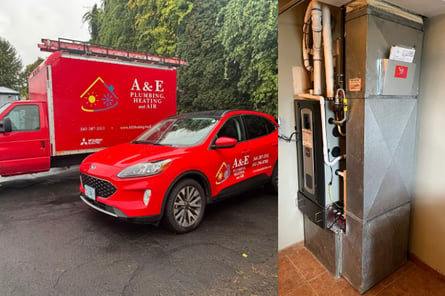 business. The people who answer the phone and show up at your house are from this area — Gresham, Hood River, The Dalles, the communities in between. We've been doing this work here long enough to know that a system spec that works fine in Portland isn't necessarily right for a home that faces the Gorge wind corridor in November or bakes at over 100 degrees for two weeks in July.
We can't make equipment cost what it did in 2020. But we can be honest with you about what you need, help you find every dollar of incentive money you qualify for, and do the installation right the first time so you're not calling us back in six months.
If you've got a quote you want a second opinion on, or you're trying to figure out whether to repair or replace, or you just want to talk through the options before committing to anything — give us a call. That conversation doesn't cost you anything.

A&E Plumbing, Heating and Air serves Gresham, Troutdale, Corbett, Cascade Locks, Hood River, Mosier, The Dalles, and surrounding communities throughout Oregon and Washington.
