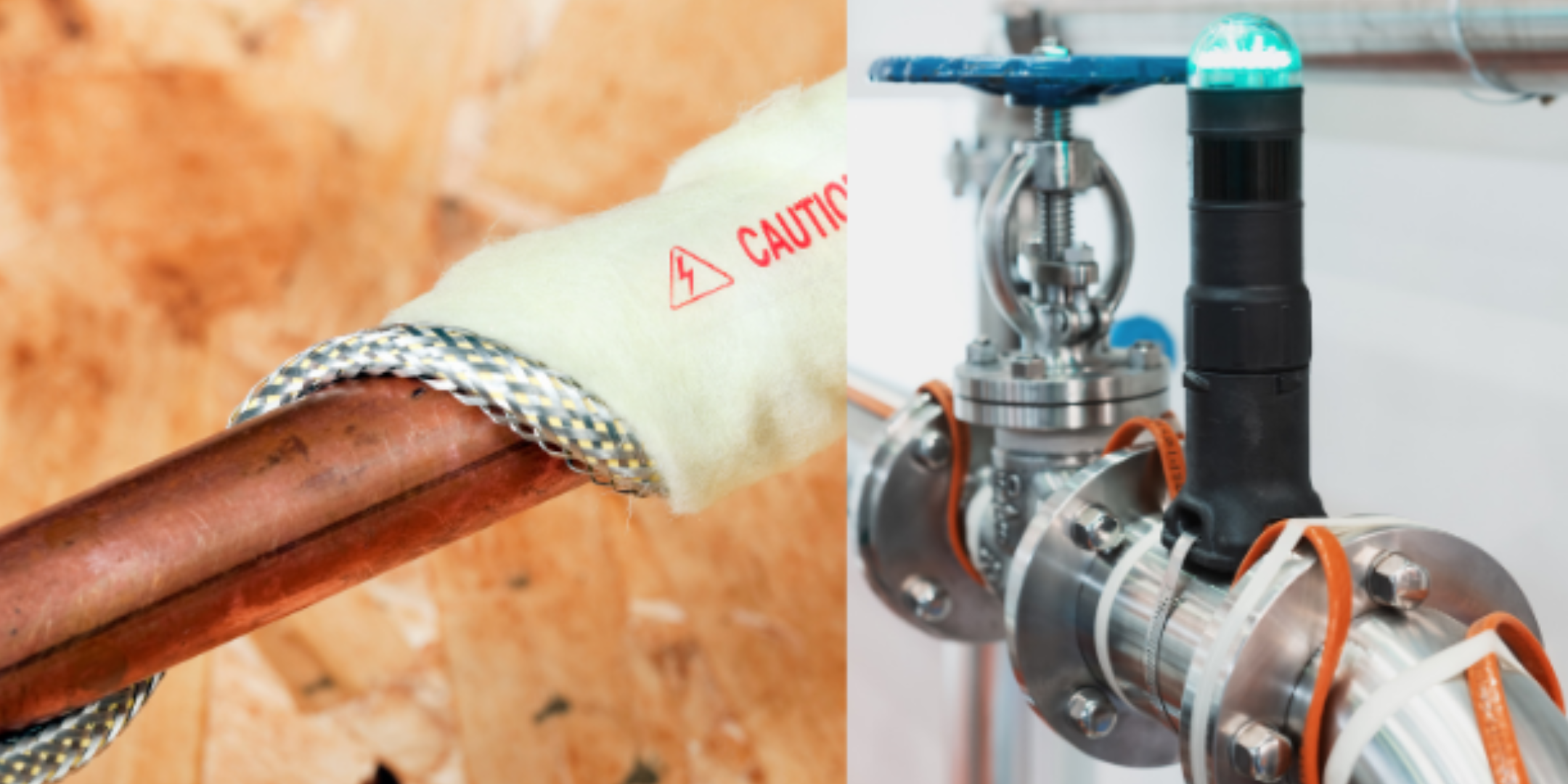
When temperatures drop across Oregon and Washington, it’s natural to worry about frozen pipes and the damage they can cause. Many homeowners start searching for “heat tape" only to find themselves overwhelmed by similar-sounding options: heat cables, heat cords, and countless kits that all claim to do the same thing.
At A&E Plumbing, Heating, and Air, we’ve spent more than 17 years helping homeowners and businesses throughout the Gorge protect their plumbing and heating systems from the cold. Our team knows exactly how confusing this topic can be, and we’re here to clear it up for you.
In this guide, you’ll learn the real differences between heat tape and heating cables, how each one works, and which is right for your situation so you can make an informed, confident choice that keeps your pipes safe all winter long.
Heating Cables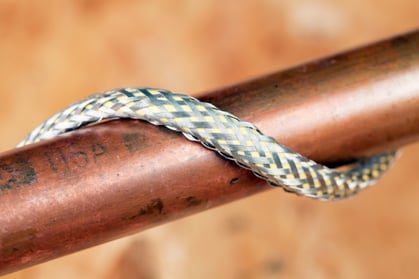
Heating cables are a reliable solution for protecting your pipes from freezing, and they differ significantly from heat tape in both design and function. Unlike the more flexible heat tape, heating cables resemble standard house wiring and are about as flexible as a garden hose. This stiffness is due to their construction; heating cables are encased in a protective housing that shields the heating elements, making them suitable for a wider range of environments.
Heating cables can also be terminated with electrical connections, providing flexibility for various installations. There are two main types of heating cables you should know about:
Self-Regulating Heating Cable
Average Price: $2 to $10 per foot, depending on wattage per foot.
These cables automatically adjust their heat output based on the surrounding temperature, ensuring they don’t overheat. However, this doesn’t mean they maintain a constant temperature without control; a thermostat is still recommended. Self-regulating cables are ideal for maintaining moderate temperatures, with versions available for both 120V and 240V systems.
Types of Self-Regulating Heating Cables
- Standard-Temperature: Suitable for temperatures up to 150°F, with heat outputs of 3 W/ft, 5 W/ft, 8 W/ft, and 10 W/ft.
- Mid-Temperature: Handles temperatures up to 250°F, offering heat outputs of 5 W/ft, 10 W/ft, and 15 W/ft.
Constant-Wattage Heating Cable
Average Price: Generally priced between $7 to $12 per foot depending on the specific wattage and voltage requirements.
Unlike self-regulating cables, constant-wattage cables do not adjust their temperature automatically and therefore require a controller to prevent overheating. These cables are suitable for higher temperature applications, capable of reaching up to 500°F, and can be used with a variety of voltages, including 120V, 208V, 240V, 277V, and 480V. Each variety offers unique benefits depending on your needs.

Heat Tape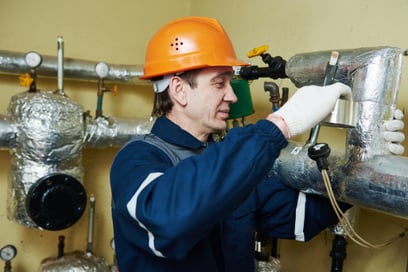
Heat tape is an essential product for applications that require high power densities, often indicating the need for higher temperatures. At A&E Plumbing, Heating and Air, we offer a range of heat tapes designed for various applications, providing consistent and reliable heating for your specific needs.
Heat tapes come in both 120 V and 240 V versions, with power ranging from 52 W to 3,135 W. While the technical details can be a bit overwhelming, the key point is that these tapes are designed for high-temperature applications and provide consistent, reliable heat. They deliver a steady amount of power, so you’ll need to use a temperature controller to avoid overheating and keep things safe.
Heat tapes are typically sold in fixed lengths, usually between 2 and 20 feet, and unlike some other products, they can’t be trimmed to size. So, it’s important to choose the right length for your needs.
Types of Heat Tape
Silicone Rubber Heat Tapes
Average Price: $10 to $15 per foot.
Higher wattage and more advanced features tend to increase the price, as well as whether the tape includes features like a built-in adjustable thermostat or grounding options.
Ideal for applications up to 450°F, silicone rubber tapes are resistant to chemicals and moisture (though not fully proof against immersion). There are versions available with a built-in adjustable thermostat and grounded options for temperatures up to 305°F.
Fiberglass-Insulated Heat Tapes
Price Range: $8 to $12 per foot, depending on temperature rating. Grounded versions for temperatures up to 482°F tend to be on the lower end of the range, while tapes designed for higher temperatures (up to 900°F) can be more expensive.
Fiberglass-insulated heat tapes are available without built-in controls, offering flexibility for a range of applications. We provide a grounded version that is suitable for temperatures up to 482°F, as well as options designed for both electrically non-conductive and conductive surfaces, which can handle temperatures as high as 900°F.
Samox High-Temperature Heat Tapes
Price Range: $15 to $25 per foot, depending on the application (whether for electrically non-conductive or conductive surfaces). The ability to withstand temperatures up to 1400°F and the specialized material contribute to the higher cost.
Made from a durable woven fabric, Samox Tapes can withstand temperatures up to 1400°F. We offer versions designed for both electrically non-conductive and conductive surfaces.
At A&E Plumbing, Heating and Air, we provide a variety of heat tape solutions tailored to meet the demands of your specific heating applications. Whether you need to maintain precise temperatures or protect your pipes from freezing, our heat tapes deliver reliable performance in even the most challenging conditions.
Heat Tape V. Heat Cables
| Features and Benefits | Heating Cables | Heating Tape |
| Cost per Foot | $2 to $12 per foot (depending on type) | $8 to $25 per foot (depending on material and type) |
| Temperature Range | Up to 500°F (depending on type) | Typically up to 450°F, some types up to 1400°F |
| Length Options | Flexible lengths, can be cut to size | Fixed lengths (typically 2 to 20 feet), cannot be trimmed |
| Installation Complexity | More flexible, easier to install in tight spaces | Simpler installation, but limited to specific lengths |
| Safety Features | Often includes self-regulating technology | Requires a temperature controller to prevent overheating |
| Durability | Designed for high durability, some types are chemical-resistant | Generally durable, some types are chemical- and moisture-resistant |
| Applications | Ideal for complex or irregular shapes, versatile uses | Best for smaller, straight pipe sections |
| Typical Uses | Industrial and residential, freeze protection, maintaining process temperatures | Primarily residential, freeze protection for pipes and small equipment |
Ideal Uses for Heating Cables
Heating cables are highly versatile and ideal for applications requiring flexible lengths and tailored heat control. They are perfect for protecting pipes in extreme cold environments, particularly in complex or irregular shapes, such as around bends or valves.
Heating cables are also well-suited for industrial settings where maintaining consistent process temperatures is crucial, as well as for long pipelines that require custom lengths. The self-regulating varieties are especially useful for energy-efficient freeze protection, automatically adjusting heat output based on ambient temperatures.
Heating cables are a go-to solution for both residential and commercial applications, offering reliable protection against freezing and maintaining operational efficiency in colder climates.
Ideal Uses for Heating Tape
Heating tape is best suited for straightforward applications where pipes are relatively small and in linear sections. It’s commonly used in residential settings to prevent water pipes from freezing, especially in unheated areas like basements, crawl spaces, or outdoor faucets.
Because it’s available in fixed lengths, heating tape is ideal when you know the exact length of the pipe needing protection. Additionally, certain types of heating tape can withstand higher temperatures, making them suitable for specific industrial uses, such as heating small equipment or providing localized heat to tanks or vessels.
Heating tape offers a simple, effective solution for targeted freeze protection in smaller applications.
Choosing The Right Home Pipe Heating Option
As you began reading, you might have been unsure about the differences between heat tape and heating cables, and which one would best suit your needs. Now, you’re equipped with a clear understanding of each product's strengths and applications. Whether it’s the versatility and customizability of heating cables or the straightforward, targeted use of heat tape, you can confidently make an informed decision for your specific situation.
With over 17 years of industry experience, we’ve guided countless homeowners and businesses through selecting the right solutions to protect their properties during winter.
Ready to protect your pipes? Follow our DIY installation guide for heat cables and take the next step in safeguarding your home.
Topics: