Edited and Published November 2026 by Eduardo Ortega
|
Short Answer Most winter HVAC problems show up the first week you turn the heat on, because a system that sat all summer is being asked to run for hours at a time. The most common ones start small: a filter clogged with summer smoke, a furnace part that keeps it from lighting, or a heat pump that can’t keep up in a cold snap. Change your filter and test your heat before the first freeze, and if anything seems off, get it looked at before the cold weather does the testing for you. |
The first cold night of the year is when you find out how your heating system spent the summer. You turn the thermostat up, hear it click, and then either the house warms up the way it should, or it doesn’t, or it smells like something is burning.
At A&E Plumbing, Heating and Air, we’ve been servicing furnaces and heat pumps across the Columbia River Gorge since 2009 and the Gresham and Portland area since 2022, and the first few cold weeks are when a lot of heating problems show up. Most of what we see that time of year isn’t a worn-out system. It’s a small problem that sat unnoticed until the heat came on.
Below are the 5 problems that show up most often as winter starts, what each one looks like, what you can safely check yourself, and when it’s worth calling a technician. If you already know your system needs attention, our heating repair team can take a look.
Why Do HVAC Problems Show Up When Winter Starts?
A heating system that sat for months is like a car that’s been parked all summer: it usually starts fine, but that’s exactly when a weak part shows itself.
Over the summer, dust settles on the burners, filters load up with smoke and pollen, and small parts like ignitors and sensors sit unused. Then the first cold snap arrives and the system goes from doing nothing to running for hours a day. That jump is what exposes the problems below, which is why most of them can be caught with a filter change and a test run before the weather turns.
1. Is Summer Smoke Still Clogging My Furnace Filter?
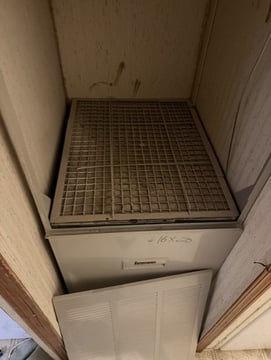
A filter that caught a summer of wildfire smoke can choke your furnace or heat pump the moment it starts running hard, and it’s the easiest problem on this list to fix.
When the filter is packed with ash and dust, your system can’t move enough air. A furnace overheats and a safety switch, called a limit switch, shuts the burners off while the fan keeps blowing, so you feel cool air and the furnace keeps starting and stopping. A heat pump just runs longer and heats less. ENERGY STAR recommends checking your filter every month during heavy-use seasons and changing it at least every 3 months. After a smoky summer in the Gorge, change it before you turn the heat on, then check it again 30 days later.
Turn the system off, slide the old filter out, and put in a new one of the same size, which is printed on the frame. The arrow on the side points toward the furnace. If you’re not sure which filter to buy, see Which Air Filter is Right for My Home?
2. Why Won’t My Furnace Light After Sitting All Summer?
If your furnace clicks, tries to light, and then shuts off, the most common cause after a long summer is a dirty flame sensor or a worn ignitor, and both are routine fixes for a technician.
Modern furnaces light themselves with an ignitor, a small part that gets hot enough to light the gas. A flame sensor, a thin metal rod in the flame, then confirms the burners are lit. A light coating of dust or residue on that sensor is enough for the furnace to decide the flame isn’t there and shut the gas off within a few seconds. After several failed tries, many furnaces lock themselves out until someone resets them.
Cleaning a flame sensor or replacing an ignitor is among the less expensive furnace repairs, and we’ll give you the price before any work starts.
You can turn the furnace off at its power switch for about 30 seconds and back on to clear a lockout once. If it locks out again, call a technician rather than resetting it over and over. One thing that is normal: a burning-dust smell the first time the heat runs each fall, which should fade within an hour or so. For more on this, see Why Is My Furnace Blowing Cold Air?
These are the calls we like getting early. As Whitney K. wrote about her visit on our heating services page, “Service was fast in response - same day for me. My furnace needed a new circuit board but I was not made to feel pressured in to buying one.”
3. Why Is My Heat Pump Struggling in the Cold?
A heat pump that runs nonstop, blows lukewarm air, or ices up during the first cold snap may be working normally, or it may be leaning on expensive backup heat, and the difference shows up on your power bill.
In cold, damp weather, a heat pump’s outdoor coil collects frost, so it runs a short defrost cycle to melt it. You may see steam coming off the unit, and the air inside may feel cool for a few minutes. That’s normal. The U.S. Department of Energy notes that high winds can cause defrosting problems, which matters here, because the east wind out of the Gorge hits outdoor units hard during cold snaps.
Many heat pumps also have auxiliary heat, a set of electric heating coils that kicks in when the heat pump can’t keep up on its own. It’s supposed to help briefly on the coldest days. If your thermostat shows auxiliary or emergency heat running for hours, or your bill jumps after the first cold week, something may be off. Auxiliary heat is electric resistance heat, and the Department of Energy says a heat pump can use up to 75 percent less electricity for heating than that, so hours of backup heat add up fast. The cause could be a low refrigerant charge, a thermostat setting or a defrost problem. A solid block of ice that doesn’t clear after a defrost cycle or two is also worth a call. Don’t chip ice off with tools, since the coil fins puncture easily. For more, see Why Is My HVAC System Freezing? 5 Causes and How to Fix Them
4. Can Snow, Ice or a Frozen Drain Shut Off My Furnace?
High-efficiency furnaces breathe through plastic pipes on the side of the house and drain water through a small line, and if snow, ice or a freeze blocks either one, the furnace shuts itself off.
If your furnace has white plastic pipes, usually called PVC pipes, running out through a wall instead of a metal flue through the roof, one pipe pulls in outside air and the other carries exhaust out. A snowdrift, ice from a dripping roof edge, or leaves packed against those openings trips a pressure switch, a safety part that stops the furnace when it can’t vent properly. These furnaces also make water, and a drain line that runs through a cold garage or crawl space can freeze and shut the system down the same way.
After a snow or ice storm, walk outside and gently clear snow from the furnace vent pipes and from around your outdoor heat pump unit. Keep the area around both clear through the winter. If the furnace still won’t run after the vents are clear, or you see water around the furnace, call a technician.
5. Could My Furnace Be Leaking Carbon Monoxide?
Carbon monoxide is the one winter HVAC problem you can’t see or smell, so a working CO alarm on every floor matters more than anything else on this list.
The CDC counted an average of 430 accidental carbon monoxide deaths a year in the U.S., not counting fires. An earlier CDC study found exposures peak in December and January, with faulty furnaces linked to about 1 in 5 cases. The usual sources are a blocked vent, like the ones in problem 4, or a cracked heat exchanger, the metal chamber that keeps burner exhaust separate from the air you breathe.
Warning signs include headaches, dizziness or flu-like symptoms that ease when you leave the house, soot around the furnace, or a burner flame that looks lazy and yellow instead of crisp and blue. If your CO alarm goes off, get everyone outside, then call 911 or your gas company from there. A fall tune-up includes a heat exchanger inspection, which is the best way to catch a crack before it becomes a problem.
What Can I Check Myself Before Calling a Technician?
These 4 free checks handle a lot of first-week heating trouble.
- Change your filter before the heat runs every day.
- Test your heat: set the thermostat to Heat a few degrees above room temperature and let it run for 15 minutes on a mild day.
- Clear the outside: remove snow, leaves and ice from the furnace vent pipes and around the outdoor unit.
- Test your CO alarms: press the test button on each carbon monoxide alarm, one on every floor.
If anything clicks without lighting, smells like burning after the first hour, or keeps shutting off, that’s the time to call. Our guide to common HVAC problems covers other symptoms you might be seeing.
What Should Gorge and Portland-Area Homeowners Watch For?
Our winters test heating systems in a few specific ways. In Hood River, The Dalles and the rest of the Gorge, summer wildfire smoke leaves filters dirtier going into fall than the label suggests, and the east wind during cold snaps is hard on heat pumps and their defrost cycles. Ice storms can knock out power, and a system that loses power mid-cycle sometimes won’t restart until its breaker or lockout is reset. In Gresham and Troutdale, freezing rain can coat outdoor units and side-wall vents overnight, so it’s worth a walk around the house the morning after. See our Hood River HVAC services, The Dalles HVAC services or Gresham HVAC services for local details.
How Do I Keep My HVAC System Running All Winter?
Most winter HVAC problems start small and can be caught before the first freeze with a filter change, a test run and a fall tune-up. A smoke-clogged filter, a dirty flame sensor, a struggling heat pump, blocked vents and carbon monoxide all show up more as the weather turns, and every one of them is easier to deal with on a mild fall afternoon than on the coldest night of the year.
A tune-up from A&E is $198, or $168 a year for a heat-only system with our Comfort Club, which includes the fall visit. To see whether a plan makes sense for your home, your next step is to read How Much Does an HVAC Maintenance Plan Cost?
|
Get your heat checked before the first freeze Schedule a tune-up or service call or call (541) 387-3311 in the Gorge or (503) 618-9646 in Gresham. A&E Plumbing, Heating and Air services furnaces and heat pumps in Hood River, The Dalles, Cascade Locks, White Salmon, Gresham, Troutdale and the Portland metro area. |
Frequently Asked Questions About HVAC Problems in Winter
Why does my furnace smell like burning the first time I turn it on?
Dust settles on the burners and heat exchanger over the summer and burns off the first time the heat runs. The smell should fade within an hour or so. If it lingers, smells electrical, or comes with smoke, turn the system off and call a technician.
Is it normal for my heat pump to steam in winter?
Yes. In cold, damp weather, a heat pump runs short defrost cycles to melt frost off its outdoor coil, and that can send up steam for a few minutes. A solid block of ice that doesn’t clear after a defrost cycle or two is not normal and is worth a service call.
What is emergency heat on a heat pump?
Emergency heat turns off the heat pump and runs only the electric backup heat. It’s meant for when the heat pump itself has failed, not for everyday cold weather, because electric backup heat costs much more to run. If you need it for more than a short time, call a technician.
How often should I change my furnace filter in winter?
Check it every month while the heat is running and change it at least every 3 months, more often if you have pets or after a smoky summer. A clogged filter can make a furnace overheat and shut off.
When should I schedule a furnace tune-up?
Early fall, before the first cold snap, is the best time, because problems show up before you rely on the heat and scheduling is easier. A&E’s tune-up is $198, or $168 a year for a heat-only system through the Comfort Club.
