|
Short Answer Most HVAC problems come down to poor airflow, a control or safety shutoff, or a worn-out part. The most common cause is a clogged air filter, and it’s the one fix almost any homeowner can do, so check it first. If a clean filter doesn’t solve the problem, call a licensed technician. |
Edited and Published November 2026 by Eduardo Ortega
Your house is 61 degrees, the thermostat says 70, and the furnace is either silent or running nonstop and blowing air that feels room temperature. You don’t know whether this is a $10 fix or the start of a $10,000 conversation, and that uncertainty is the worst part.
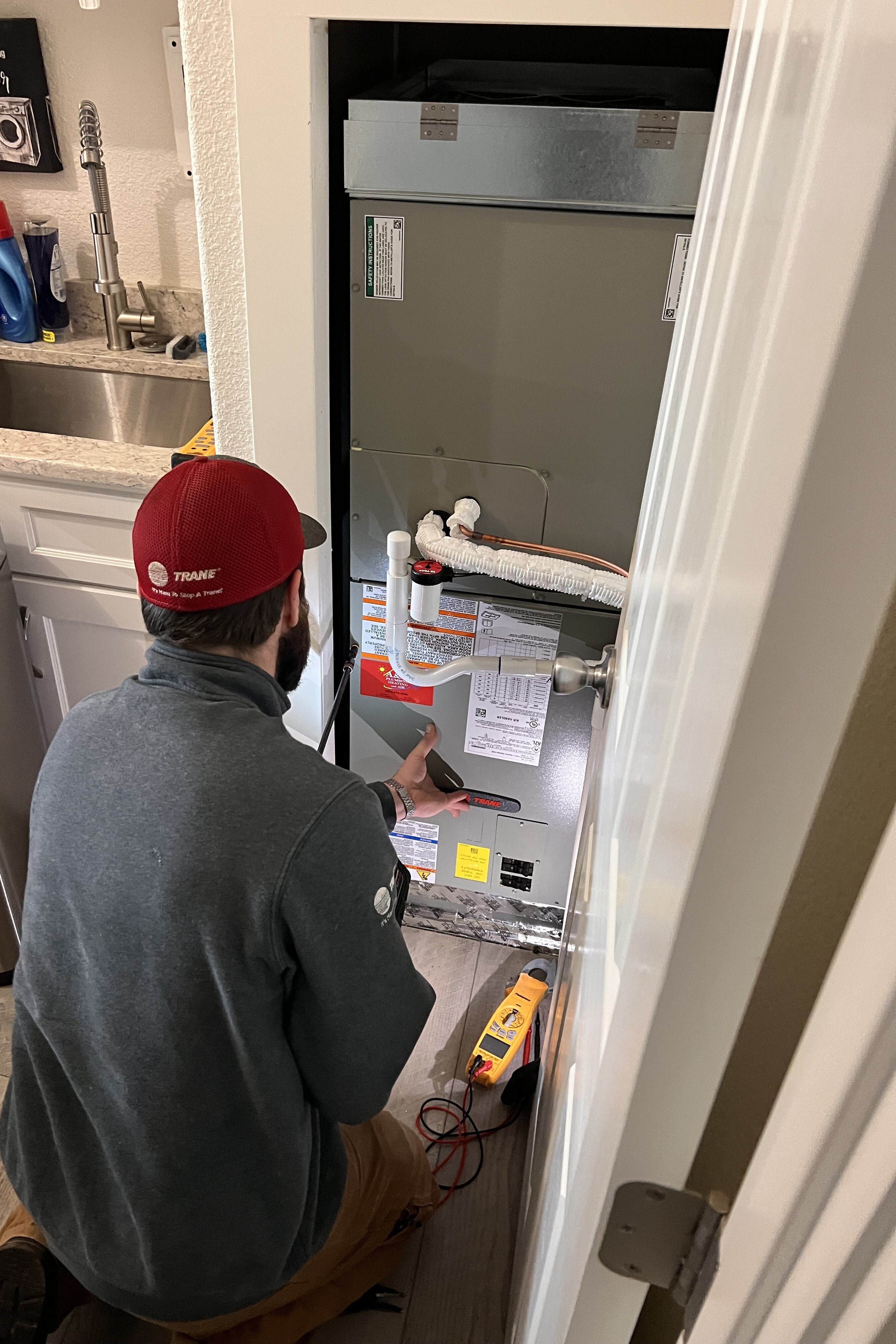
We’ve been fixing heating and cooling systems in the Columbia River Gorge for over 17 years. We fix HVAC systems for a living, so you’d expect us to tell you to call. But the most common fix doesn’t need us at all: a clogged air filter, and it’s behind more of these problems than you’d think.
Below are the 10 problems we see most, what each one looks like, the one thing to check first, and when it’s time to call a pro. If you’re already past the DIY stage, our HVAC repair and replacement services page explains what a visit looks like.
What Should You Check Before You Call?
The air filter is the one fix most homeowners can handle, and it’s worth checking before you call about almost anything on this list. Use this table to see where your symptom fits, then jump to that section.
|
Problem |
Common signs |
What to do |
|
1. Dirty air filter |
Weak airflow, dust, higher bills |
Replace it with the same size; check it monthly |
|
2. Thermostat trouble |
System won’t start, wrong temperature |
Check it’s on Heat or Cool and change the batteries; then call |
|
3. Tripped breaker or safety switch |
System completely dead |
Check the breaker and the furnace’s power switch; reset once, call if it trips again |
|
4. Short cycling |
Turns on and off every few minutes |
Replace the filter; call if it keeps turning on and off |
|
5. Uneven temperatures |
Hot upstairs, cold rooms, stuffy spots |
Clear the vents; call a technician if rooms differ by more than 5 to 8 degrees |
|
6. Frozen coil or iced heat pump |
Ice on lines or coil, little or no airflow |
Turn it off to thaw and check the filter; call if it refreezes |
|
7. Furnace blowing cold air |
Cool air from vents in heat mode |
Set the fan to Auto and replace the filter; then call |
|
8. Strange noises or smells |
Banging, squealing, burning or rotten-egg smell |
Turn it off and call (gas smell or CO alarm: get out first) |
|
9. AC won’t cool |
Runs but air isn’t cold |
Replace the filter and check it’s on Cool; then call |
|
10. Aging system, frequent repairs |
Rising bills, repeat breakdowns |
Compare the repair cost with a replacement quote |
1. Why Does a Dirty Air Filter Cause So Many HVAC Problems?
A clogged filter is one of the most common causes of HVAC trouble, and it’s often the hidden reason behind other problems on this list, like short cycling, frozen coils and a furnace blowing cold air.
When the filter is packed with dust, your system can’t move enough air. Furnaces overheat and shut themselves off, AC coils get cold enough to ice over, and everything works harder for less comfort. ENERGY STAR recommends checking your filter every month, especially in winter and summer, and changing it at least every three months.
- Signs: weak airflow from vents, more dust on furniture, the system running longer than usual, higher bills
- Fix it yourself: turn the system off, slide out the filter, and replace it with the same size (printed on the frame). Arrow points toward the furnace or air handler
- Gorge and Portland tip: during wildfire smoke season, check it every couple of weeks. Smoke clogs filters fast
Not sure which filter to buy? See Which Air Filter is Right for My Home?
|
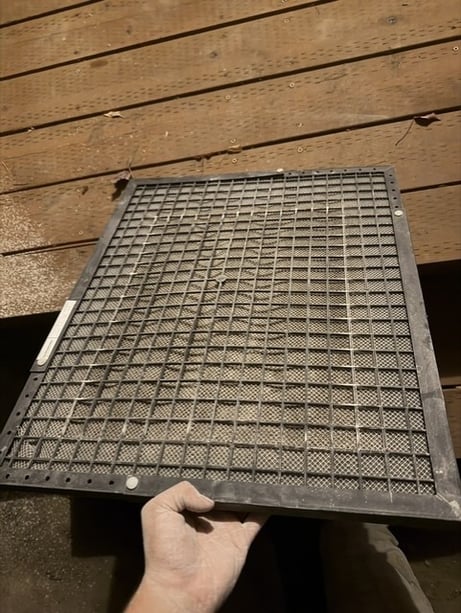
From Our Team: What Happened When I Checked My Own Filter “I bought my house a little over a year ago and remodeled most of it, but the furnace filter never made my list. This fall, right before I turned the heat on for the first time, I finally pulled it out. It was an old washable filter, and it was so packed with dust it probably hadn’t been cleaned in years. I sent photos to Josh, Install Manager here at A&E, and even he was surprised by how bad it was. I swapped it for a new disposable filter, and Josh’s advice was simple: put checking and changing your air filter on your yearly home maintenance list, and check it every month during the heating and cooling season.” — Eduardo Ortega, Marketing Manager, A&E Plumbing, Heating and Air |
2. Is Your Thermostat the Real Problem?
Thermostat trouble usually needs a technician, because the thermostat often isn’t the real problem.
The thermostat tells your system when to run. When the screen goes blank or the system stops responding, the thermostat is often reacting to something else, like a safety switch that shuts the system down or a clogged condensate drain line.
- Signs: blank screen, system won’t start, temperature never matches the setting
- Quick check first: make sure it’s set to Heat or Cool, and replace the batteries if it uses them
- If you’re comfortable going further: turn off power to the system, then check that the safety switches are set and the condensate drain line isn’t clogged. A tripped switch or a clogged drain can make the thermostat look dead
- Call a technician if that doesn’t fix it, if you’d rather not open up the equipment, or if problems started right after you installed a new smart thermostat. A mis wired C-wire can damage the control board
More steps: Tips to Troubleshoot Your Thermostat
3. Could a Tripped Breaker or Safety Switch Be Shutting Everything Off?
A tripped breaker can shut your whole system down, and even if resetting it works, it’s worth a technician’s look, because a breaker usually trips when the system is overloaded.
HVAC systems have built-in shutoffs designed to stop them before something worse happens. A tripped breaker is the circuit protecting itself, which usually means something drew more power than it should.
- Breaker: in your electrical panel, find the breaker labeled furnace, air handler, AC or heat pump. A tripped one sits in the middle or off position; flip it fully off, then back on. Reset it once. If it trips again, call. If it holds, still schedule a check
- Furnace door switch: a safety button the front panel presses when it’s closed. If the panel isn’t seated all the way, the furnace won’t run. Push it closed
- Condensate switch: ACs, heat pumps and high-efficiency furnaces drain water through a small pipe. If it clogs, a float switch shuts the system off to prevent water damage. With the power off, you can clear it yourself if you’re comfortable, or call a technician. See cause 3 in Why Is My Furnace Blowing Cold Air?
- Service switch: a light-switch-style power switch on or near the furnace. It’s easy to flip off by mistake, so make sure it’s on
4. Why Does Your HVAC System Keep Turning On and Off?
Short cycling means your system turns on, runs for only a few minutes, shuts off and then starts again, over and over, and it’s a sign something is wrong.
A healthy system runs until the house reaches the temperature you set. One that short cycles quits early, so rooms never get comfortable, bills go up, and parts like the AC compressor and furnace ignitor wear out faster. You’ll usually hear it click on and off several times an hour. A clogged filter or a frozen coil can both cause it.
- Check first: the air filter. If it’s clean and the system still turns on and off every few minutes, call a technician
- What a technician looks for: low refrigerant, a dirty furnace flame sensor, an overheating limit switch, a thermostat in the wrong spot, or equipment that’s too big for the house
Honest note: if the system is oversized, no repair fixes it. It’s a sizing problem, and it’s worth knowing before you sink money into parts.
Want to know what else causes short cycling, and why a system that’s too big for the house is a common culprit? Read What Is Short Cycling?
5. Why Are Some Rooms Too Hot or Too Cold?
A few degrees of difference between rooms is normal, but if rooms are more than 5 to 8 degrees apart, it’s time for a technician to check your airflow and ducts.
ENERGY STAR says a typical house loses about 20 to 30 percent of the air moving through its ducts to leaks, holes and poorly connected ducts. That air ends up in your attic or crawl space instead of the back bedroom. We cover the most common duct issues in 5 Common Ductwork Problems That Impact Your HVAC Performance.
- Check first: open every supply vent, move furniture and rugs off vents and returns, and change the filter
- Call a technician if rooms are still more than 5 to 8 degrees apart. Common causes are disconnected or leaky ducts, missing duct insulation in a crawl space or attic, or a system that was never balanced for the house
- Is upstairs always hot? That’s common in two-story homes and often a duct design issue, not a broken system
[IMAGE CTA: “Some Rooms Still Too Hot or Too Cold?” · “An A&E technician can check your airflow and ducts and find where the air is going.” · Button: Schedule a Service Call → https://www.aeheatingandcooling.com/schedule-service · Alt text: Schedule an A&E service call to fix uneven room temperatures]
6. Why Is There Ice on Your AC or Heat Pump?
A thin layer of frost on a heat pump in winter is normal; a solid block of ice, or ice on an indoor coil or refrigerant line in summer, is not.
In cold, damp weather a heat pump’s outdoor coil collects frost, and the system runs a defrost cycle to melt it. You may even see steam coming off the unit, which surprises a lot of people. Thick ice that stays, or ice in cooling season, usually means low airflow or low refrigerant.
- Normal: light frost that clears on its own, steam during defrost, a short pause while it defrosts
- Not normal: the outdoor coil fully encased in ice that doesn’t clear after a defrost cycle or two, or ice on the indoor coil or copper lines in summer
- Check first (cooling season): switch the system off, set the fan to On to help it thaw, and check the filter. If the filter is clean, call a technician. Ice usually means low refrigerant or an airflow problem inside the system
- Don’t: chip ice off with tools. The fins and coil are easy to puncture. If it freezes again after thawing, call A&E at (541) 387-3311 in the Gorge or (503) 618-9646 in Gresham, or schedule a service call online
Full guide: Why Is My HVAC System Freezing? 5 Causes and How to Fix Them
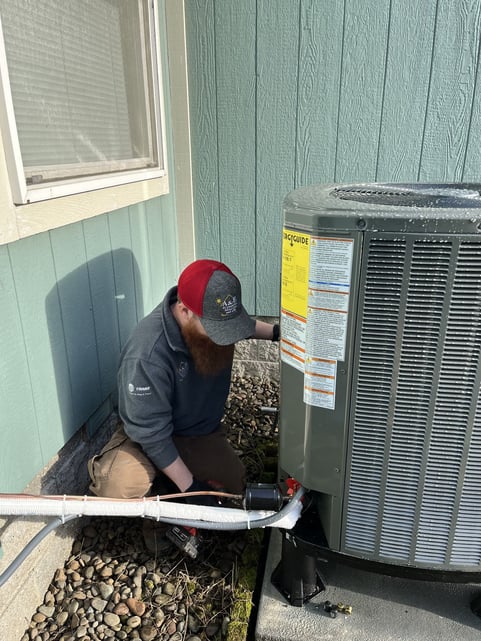
7. Why Is Your Furnace Blowing Cold Air?
A furnace blowing cold air usually needs a technician, unless the cause is a dirty filter that made it overheat.
Furnaces are built to failsafe. If something isn’t right, like overheating from a clogged filter, the burners shut off while the blower keeps moving air, which feels cold.
- Check first: the air filter. If it’s clogged, replace it and give the furnace a few minutes to reset
- Call a technician if: the filter is clean, the burners won’t light, the furnace starts and shuts down repeatedly, or a fault code is blinking on the control board
- Heat pump owners: a heat pump’s air feels cooler than furnace air even when it’s working correctly. Lukewarm air isn’t automatically a problem
More detail: Why Is My Furnace Blowing Cold Air?
8. What Do Strange HVAC Noises and Smells Mean?
Most new noises mean a part is wearing out, but a rotten-egg smell or a carbon monoxide alarm is an emergency: get everyone out first, then call.
Systems make some noise, and you learn what normal sounds like. A new sound is worth paying attention to, because catching a worn part early is almost always cheaper than waiting for it to fail.
- Squealing or screeching: often a worn blower motor or belt. Turn it off and call. For AC sounds, see Why Is My Air Conditioner Making Noise?
- Banging or loud clicking at startup: can be a loose part, or on a furnace a delayed ignition. Get it checked
- Burning dust smell the first time the heat runs each fall: usually normal; it should fade within an hour or so. If it doesn’t, or it smells electrical, shut it off
- Rotten-egg (gas) smell: leave the house without flipping switches, then call 911 or your gas company from outside. NW Natural customers can find safety steps on NW Natural’s safety page
- Carbon monoxide alarm: get everyone outside and call 911
[IMAGE CTA: “Hearing a New Noise From Your System?” · “Catching a worn part early is almost always cheaper than waiting for it to fail.” · Button: Schedule a Service Call → https://www.aeheatingandcooling.com/schedule-service · Alt text: Schedule an A&E technician to check a noisy HVAC system]
9. Why Is Your AC Running but Not Cooling?
If the filter is clean, an AC that runs without cooling usually has a refrigerant leak or a failing part, and refrigerant is not a DIY job.
Refrigerant runs in a sealed loop, so if it’s low, it leaked somewhere. Federal rules restrict refrigerant for home AC systems to EPA Section 608 certified technicians (EPA refrigerant sales restriction), and topping it off without fixing the leak just means paying again next summer.
- Check first: the air filter. If it’s clean and the air still isn’t cold, call a technician
- Call a pro for: warm air with the outdoor fan running, a hissing sound at the lines, ice on the lines, or the outdoor unit humming but not starting
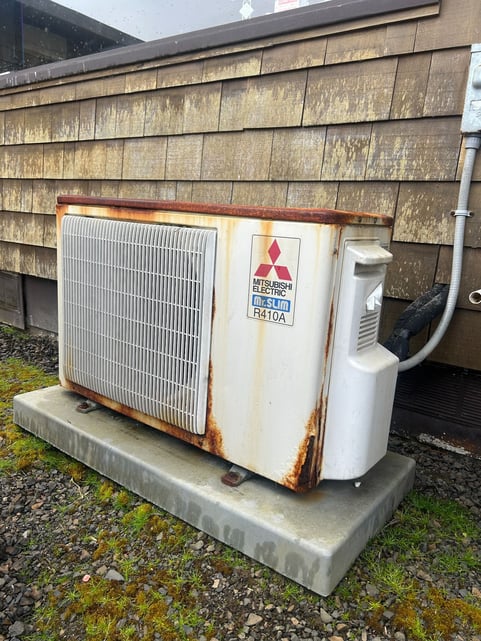
- If you have an R-410A system: it can still be repaired and recharged. Newer systems use refrigerants like R-454B, but you don’t have to replace a working R-410A system just because the industry moved on
If it quit on the hottest day of the year: Surviving Sudden AC Failures in Oregon & Washington
10. When Is an Aging HVAC System the Real Problem?
When an older system needs repairs every season and your bills keep climbing, the honest answer may be that the next repair isn’t worth it.
Sometimes the problem isn’t one part; it’s the whole system wearing out. We’ll still fix it if that’s the right call, but we’d rather tell you the truth before you spend on a third repair in two years. For context, A&E’s pricing guide puts a straightforward central air or heat pump replacement at $9,500 to $13,000 or more installed (Why HVAC Prices Have Gotten So High).
- Signs it may be time: repeat breakdowns, parts that are hard to get, rising energy bills with no change in use, rooms that never get comfortable
- Questions to ask your technician: what this repair costs, what’s likely to fail next, and what a replacement would cost for comparison
- Get a ballpark: our HVAC price calculator gives an estimate without a sales call
Not sure which problem you have? Call us at (541) 387-3311 in the Gorge or (503) 618-9646 in Gresham, and we’ll help you sort out whether it’s something you can check first.
What Should Gorge and Portland-Area Homeowners Watch For?
Our weather makes a few of these problems more common here. In the Gorge, wind and wildfire smoke clog filters fast, The Dalles’ summer heat is hard on air conditioners, and heat pumps spend more time in defrost in winter. In Gresham and Troutdale, the east wind and freezing rain can push a tired furnace or heat pump past its limit, so if yours struggled last winter, have it checked before the next cold snap. See our Hood River HVAC services or Gresham HVAC services for local details.
What Should You Do Next About Your HVAC Problem?
Start with the one free check: the air filter. If a clean filter doesn’t solve it, call a licensed technician, especially for anything involving refrigerant, gas, wiring or a strange smell. We’ve been diagnosing these problems across the Gorge since 2009, and every installation we do is backed by our Lifetime Workmanship Guarantee.
If your system keeps having the same problems, your next step is to read Is It Time to Repair, Replace, or Retrofit Your HVAC? so you can decide whether the next repair is worth it.
|
Need help with your HVAC system? Schedule a service call or call (541) 387-3311 in the Gorge or (503) 618-9646 in Gresham. A&E Plumbing, Heating and Air diagnoses and repairs furnaces, heat pumps and air conditioners in Hood River, The Dalles, Cascade Locks, White Salmon, Gresham, Troutdale and the Portland metro area. |
Frequently Asked Questions About Common HVAC Problems
How do I know if my HVAC problem is an emergency?
Leave the house and call 911 or your gas company if you smell rotten eggs or your carbon monoxide alarm goes off. A system that won’t heat during freezing weather, especially with infants, older adults or anyone with a medical condition at home, also needs a same-day call. Most other problems, like noise, uneven rooms or higher bills, can wait for a regular appointment.
How often should I change my HVAC filter?
We recommend checking your filter every month and changing it at least every three months. Change it more often if you have pets, allergies or construction dust, and check it every couple of weeks during wildfire smoke season.
Why does my furnace smell like burning when I first turn it on?
Dust settles on the burners and heat exchanger over the summer, and it burns off the first time the heat runs in the fall. The smell should fade within an hour or so. If it lingers, smells electrical, or comes with smoke, shut the system off and call a technician.
Should I repair or replace an HVAC system that keeps breaking down?
It depends on the system’s age, how often it fails, and what the repair costs compared with replacement. Ask your technician what the repair costs, what is likely to fail next, and what a new system would cost, then compare. If an older system needs repairs every season, replacement is often the better use of your money.
