Last updated October 2026.
The top central air conditioners from Carrier, Lennox and Trane right now are the Carrier Infinity 21 (model 26VNA1), the Lennox SL25KCV and the Trane 20 TruComfort, rated by their makers at up to 21, 26 and 24 SEER2. None of them is cheap, and this article does not print a price for any one of them, because the national installed prices published for 2026 run from $3,000 to $15,000 or more and your house decides where you land.
 If you are reading this with a quote in hand that names a Lennox XC25 or a Trane XV20i, start with the section on what changed, because neither product page exists on the manufacturers' websites anymore. If your air conditioner quit during a heat wave, you can skip ahead to the table and the cost section. We install and service air conditioning for homes across the Columbia River Gorge, Gresham and the Portland Metro area, so this guide is written around the summers you actually get, with real ratings, national cost ranges labeled as national, and the drawbacks the spec sheets leave out.
Which air conditioners are the top picks from Carrier, Lennox and Trane in 2026?
Here are the three side by side. Every efficiency figure is the maker's best-case "up to" number from its own current product page, not an independent test result. The price column is missing on purpose, and the cost section below explains why.
| Brand and model | Efficiency (SEER2, up to) | Refrigerant | Best for | The main drawback |
|---|---|---|---|---|
| Carrier Infinity 21 (model 26VNA1) | 21 SEER2, 12 EER2 | R-454B | Quiet operation (as low as 55 dB) and Carrier's app and controls | Lowest efficiency ceiling of the three, and the smart features are built around Carrier's own controls |
| Lennox SL25KCV | 26 in the page headline, 25.10 in the spec table on the same page | R-454B | The highest efficiency number here, for homes where the AC runs a lot | Marked $$$$ on Lennox's own price guide, and listed as limited availability through Lennox dealers |
| Trane 20 TruComfort (model 5TTV0X) | 24 on Trane's web page, 23.6 in its 2026 brochure | R-454B | A variable-speed unit that pairs with Trane's Link controller and Smart Thermostat | Trane's own page and brochure disagree on the top number, and noise is published as sound power, so it cannot be lined up against the other two |
These are all premium units, and for a home where the AC runs a few weeks a year, a mid-range unit may be the better buy.
What changed since the 2025 version of this list?
Two of the three model names are gone from the manufacturers' websites, and every efficiency number in the old article used a rating that stopped being the standard in 2023.
- Carrier Infinity 21: the name is the same. Carrier now lists it as model 26VNA1, rated up to 21 SEER2 and using R-454B refrigerant.
- Lennox XC25: Lennox's page for it now returns page not found. The closest current model is the SL25KCV, rated up to 26 SEER2. Lennox's page does not say the SL25KCV replaces the XC25, so that match is an inference.
- Trane XV20i: Trane's page for it returns page not found too. Trane's current variable-speed air conditioner is the 20 TruComfort, model 5TTV0X. The XV20i name survives only in an image label on Trane's own product page, so this guide treats the 20 TruComfort as its replacement, which is also an inference.
Three claims from the old article are gone because no source backs them: that Lennox requires specific dealers for repairs, that Trane units outlast the competition, and that you can stop thinking about a Trane for 15 years.
The metric changed as well. The 21, 26 and 22 figures in the old version were SEER ratings. Manufacturers now publish SEER2, which took effect for new equipment on January 1, 2023. The Department of Energy says SEER2 ratings are similar to SEER ratings but not directly comparable, so a 26 SEER claim from 2025 does not mean 26 SEER2 today. The guide to the difference between SEER and SEER2 explains how the test changed, and the SEER, EER and HSPF guide covers the ratings you will see on a spec sheet.
If a quote shows a model name you cannot find on the manufacturer's site, or a plain SEER number, ask for the current model and its SEER2 rating before you compare it to anything.
Who is the Carrier Infinity 21 (model 26VNA1) right for?
Pick the Infinity 21 if you value a quiet, variable-speed unit with app control more than the highest efficiency number. Carrier rates it at up to 21 SEER2 and 12 EER2, the lowest SEER2 ceiling of the three here, though still well above the federal minimum covered further down.
Buy the 26VNA1 for quiet operation and smart controls. Do not buy it because someone calls it the most efficient system available, because Carrier's own rating is the lowest of these three.
What the 26VNA1 does well
- Variable speed. Carrier says the compressor adjusts between 25% and 100% of capacity, so it matches the day rather than running at one speed.
- Low noise. Carrier lists sound as low as 55 decibels, including its Silencer System II. "As low as" is the best case, not a promise for every size or every afternoon.
- App control. The Carrier SmartHome app adjusts temperature and sets schedules on a compatible Carrier system.
- A warranty choice. With timely registration, Carrier lists either a 10-year parts-only limited warranty or a 5-year parts plus 3-year labor limited warranty. The second option is only available if your installing contractor has opted into Carrier's program, and the warranty period is 5 years if you do not register within 90 days.
What holds it back
- The lowest ceiling. Up to 21 SEER2 against 24 and 26 for the other two.
- Controls tied to Carrier equipment. Carrier describes app control for a compatible Carrier system. Carrier's page does not confirm that a third-party Wi-Fi thermostat gets the same features, so the old claim that it works seamlessly with any Wi-Fi thermostat is gone. Check before you assume your current thermostat will work.
- A premium price. It is Carrier's top air conditioner, so ask for a quote against a mid-range Carrier to see what the upgrade costs you. It also needs professional installation.
For a longer look at this model, including its own FAQ, read the Carrier Infinity 21 review. Carrier's full specifications are on its Infinity 21 product page.

Who is the Lennox SL25KCV right for?
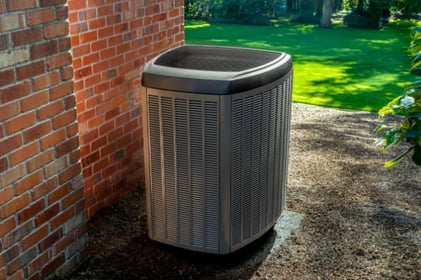 The SL25KCV is for the homeowner whose air conditioner runs for long stretches and who wants the highest efficiency number on this list. Lennox rates the SL25KCV at up to 26 SEER2 in the page headline and 25.10 SEER2 in the specification table on the same page, so ask your installer which figure applies to the size being quoted.
The SL25KCV is the efficiency leader here, and it is also the one where you most need to ask who will install it and who will service it.
What the SL25KCV does well
- Efficiency. Up to 26 SEER2 with variable-capacity operation, and Lennox lists it as ENERGY STAR certified.
- Low noise. Lennox lists sound as low as 58 dB, which it compares to a microwave. Again, "as low as" is the best case.
- Refrigerant. It uses R-454B, the same as the other two.
- Warranty. Lennox says all Dave Lennox Signature Collection models carry a 10-year limited warranty on the compressor and covered components.
What holds it back
- Price tier. Lennox's own price guide marks the SL25KCV $$$$.
- Dealer access. Lennox lists it as limited availability and points you to a dealer. The old article said Lennox requires specific dealers for repairs, and no source backs that, so here is the practical version: before you sign, ask whoever quotes it whether they are an authorized Lennox dealer and who handles warranty work.
- The name. The XC25 page is gone, and the SL25KCV appears to be its successor. That is an inference, not something Lennox states. Lennox's full specifications are on its SL25KCV product page.
Who is the Trane 20 TruComfort (model 5TTV0X) right for?
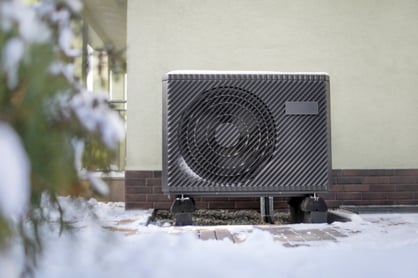 Look at the 20 TruComfort if you want a variable-speed unit from Trane and are comfortable with Trane's own controls. Trane's web page rates it at up to 24 SEER2 and up to 14 EER2, while Trane's 2026 brochure says up to 23.6 SEER2. The two Trane documents disagree, so both appear here.
Ask for the SEER2 of the exact outdoor unit and coil in your quote, because for this line even the headline number depends on which Trane document you read.
What the 20 TruComfort does well
- Sizes. Trane lists 2, 3, 4 and 5 nominal tons.
- Controls. Trane says it connects to the Link Communicating System Controller and Smart Thermostat.
- Refrigerant. R-454B, with an EER2 up to 14 on Trane's web page.
What holds it back
- Two efficiency numbers. Up to 24 on the web page and up to 23.6 in the brochure. The difference is small, but a quote should name the figure it relies on.
- Noise is hard to compare. Trane publishes an overall sound power level of 64 to 76 dB(A) for this model, a different measurement from the sound levels Carrier and Lennox list. The old claim that it runs slightly louder than rivals cannot be confirmed either way.
- The name. The XV20i page is gone, and the 20 TruComfort is the best match for it. The old line that Trane has fewer smart features than Carrier is gone too, since Trane's own page describes a communicating controller and a Smart Thermostat. Trane's full specifications are on its 20 TruComfort product page.
The earlier Trane XV20i review was written for the model before the rename, so read its efficiency figure as the old rating and check it against the current numbers on this page.
What is the minimum SEER2 for a new air conditioner in Oregon and Washington?
The federal minimum is 13.4 SEER2 for split-system and single-package central air conditioners in the Department of Energy's northern region, where Oregon and Washington fall. DOE's standards FAQ defines the northern region as states with 5,000 or more heating degree days, and its regional guidance names the Southeast and Southwest states one by one. Oregon and Washington are on neither list, so placing them in the north is a reading by exclusion, not a line DOE prints for each state.
All three units here are rated far above that floor, at up to 21, 24 and 26 SEER2. The floor is not what you are shopping against. The extra efficiency above it is what you pay a premium for, and it only pays you back when the air conditioner runs.
"Up to" means the best rating the maker lists for that line, so ask what the rating is for the exact size and indoor coil in your quote.
What does a new central air conditioner cost in 2026?
National sources put an installed central air conditioner anywhere from about $3,000 to $15,000 or more. None of these numbers is an A&E quote, and none is specific to Oregon or Washington.
- Carrier: its price page says air conditioner costs typically range between $3,000 and $15,000 or more including installation. That covers all Carrier air conditioners nationally in 2026.
- Trane: its price page says Trane air conditioner replacement costs nationally average from $6,958 to $13,418 installed in 2026.
- This Old House: its 2026 survey of 1,000 homeowners found central air conditioning at a low of $6,345, an average of $8,460 and a high of $10,575. This Old House is a media site, and that page carries a form for contractor estimates, so weigh it accordingly.
Manufacturers sell the equipment, and a survey average blends small homes with large ones. Even Trane's price page tells you to get three detailed quotes.
The 2025 version of this article printed an installed price for each model. We pulled them, because no source backed them and other pages on our own site gave different numbers for the same units. A price that changes from page to page is not one you can plan around.
What moves the price is easier to pin down. Carrier lists unit size, efficiency (SEER2 rating), home size and installation complexity, and Trane notes that a 5-ton unit costs more than a 2-ton. In the Gorge, ductwork matters too, which the Columbia River Gorge installation cost guide breaks down, and the post on why HVAC prices have gotten so high covers what happened to equipment pricing. If the size of the number is the obstacle, see the financing options.
Treat every number above as a national range, not as what we would charge you. The real number depends on your home's size, your ductwork and the installation conditions.
Free, takes about a minute, no account needed. It gives you an estimate, not a firm quote.
Is there a tax credit or rebate for a new air conditioner right now?
As of October 2026, we found no federal credit and no Energy Trust incentive for a cooling-only central air conditioner.
- Federal: the 25C credit does not apply to property placed in service after December 31, 2025, according to the IRS. ENERGY STAR lists the central air conditioner credit for products purchased and installed between January 1, 2023 and December 31, 2025. If a quote, an ad or an older article still counts on a federal credit for a 2026 install, it is out of date.
- Energy Trust of Oregon: its 2026 residential incentive sheet lists heat pump incentives, including $1,000 for a ducted heat pump in an owner-occupied single-family home and $800 for a ductless one, for PGE and Pacific Power customers, with conditions. The ducted incentive requires an HSPF2 of 7.5 or higher and replacing an electric forced-air furnace. The sheet has no line for a cooling-only air conditioner. Energy Trust also has a page on residential cooling solutions.
- State of Oregon: the Oregon Department of Energy says no home energy rebates are currently available. Contractor enrollment opens October 12, 2026, and an application date has not been set.
- Southern Washington: utilities there run their own programs, and we have not verified each one. Ask your utility before you buy.
Energy Trust's 2026 sheet pays for heat pumps and not for cooling-only air conditioners, so price a heat pump alongside any central AC quote. The comparison of central air, heat pumps and ductless systems lays out how they differ.
How hot do Gorge and Portland summers get, and does it change which AC to buy?
Cooling season in Portland has grown. The airport logged 898 cooling degree days in 2023, against an average of about 530 a year from 2001 to 2020. A cooling degree day counts how many degrees a day's average temperature sits above 65F, so a higher yearly total means more hours of AC running.
The National Weather Service Portland climate table shows 785 in 2015, then 838 in 2021, 865 in 2022 and 898 in 2023. Each of those last three years is higher than any earlier year in the table. The two averages (about 530 for 2001 to 2020 and 867 for 2021 to 2023) are our arithmetic on that table, which has no entries after 2023.
Single days tell the same story. Portland hit 108F, 112F and 116F on June 26, 27 and 28, 2021, each an all-time record, according to NOAA. The National Weather Service office in Pendleton corroborates the 116F and reports 118F in Dallesport, Washington on June 28, 2021. We could not find an official Hood River peak for that event or a Hood River cooling degree day table, so we are not quoting one. Public radio reporting that cites National Weather Service data says Portland has recently averaged about 20 to 25 days a year above 90 degrees.
What that means for you: the more hours your air conditioner runs, the faster a higher SEER2 earns back its premium, and the more a quiet variable-speed unit matters on an afternoon when it runs for hours. If yours runs a few weeks a year, the payback stretches out. There is no payback figure here for Gorge homes, because we do not have one we would stand behind.
We serve homeowners in Gresham, Hood River, The Dalles, Dallesport and the Portland Metro area, along with the wider Oregon and Washington service areas. The air conditioning service page and HVAC services page show what we handle.
Each of 2021, 2022 and 2023 was hotter by this measure than any year in the National Weather Service table before 2021, so size your decision to the summers you are having now, not the ones you remember.
How do you choose between these three?
 Choose on how much your air conditioner runs, how long you will stay and what you want from the controls, then compare your finalists on a written quote that names the model number and the SEER2 rating.
- Your AC runs most summer afternoons and you plan to stay: weigh the Lennox SL25KCV for its efficiency number, and settle the dealer question first.
- Quiet and app control matter most: look at the Carrier 26VNA1 and its 55 dB best case.
- You want variable speed with Trane's controls: look at the 20 TruComfort, and make sure the quote names which SEER2 figure it uses.
- Your AC runs a few weeks a year, or you may move within a few years: none of these may earn back its premium. The comparison of 14 SEER2 and 16 SEER2 systems for Gorge homes covers the mid-range choice.
Before you sign any quote, ask these five questions:
- What is the exact model number, and what is the SEER2 rating for that size and coil?
- Which warranty option applies, and who registers the unit?
- Is the company an authorized dealer for this brand?
- How was the unit sized for my home? The post on how to size an AC system explains why oversizing causes short cycling.
- Would a heat pump change the math?
A quote that names the model number, the SEER2 rating, the warranty option and how the unit was sized is one you can compare. A quote that does not is just a total.

Frequently asked questions
What is the minimum SEER2 for a new air conditioner in Oregon and Washington?
Since January 1, 2023, new split-system and single-package central air conditioners must meet 13.4 SEER2 in the Department of Energy's northern region. Oregon and Washington are not on DOE's Southeast or Southwest lists, so they fall in the north by exclusion, which is our reading rather than a line DOE prints. All three air conditioners in this article are rated well above that floor.
Can I compare a SEER rating from 2025 to a SEER2 rating today?
A SEER number and a SEER2 number are not directly comparable, according to the Department of Energy. The 21, 26 and 22 SEER figures in last year's version of this article used the old metric, so ask for the SEER2 rating of any unit before you compare it to another. The guide to SEER and SEER2 explains what changed.
How much does a new central air conditioner cost in 2026?
National sources put an installed central air conditioner between about $3,000 and $15,000 or more. A 2026 homeowner survey from This Old House found a low of $6,345, an average of $8,460 and a high of $10,575. None of those is an A&E quote, so the number you can rely on comes from a written quote for your home, and the price calculator gives you a starting estimate.
Is there a tax credit or rebate for a new air conditioner in 2026?
There is no federal 25C credit for a central air conditioner placed in service after December 31, 2025. Energy Trust of Oregon's 2026 sheet lists heat pump incentives but no line for a cooling-only air conditioner, and Oregon's federally funded home energy rebates had not launched as of October 2026. Washington utilities run their own programs, so ask yours.
Which is the best air conditioner for the Columbia River Gorge, Carrier, Lennox or Trane?
None of the three wins for every home. The Lennox SL25KCV has the highest efficiency rating at up to 26 SEER2, the Carrier Infinity 21 has the lowest ceiling at up to 21 SEER2 but lists sound as low as 55 decibels, and the Trane 20 TruComfort is rated up to 24 SEER2 on its web page. The better question is how many hours your air conditioner runs and how long you will stay, and a written quote with the model number and SEER2 on it lets you compare your finalists fairly.
Should I buy a heat pump instead of a central air conditioner?
A heat pump cools your home like an air conditioner and also heats it, and Energy Trust of Oregon lists incentives for heat pumps that it does not list for cooling-only units. Those incentives carry conditions, such as a minimum HSPF2 of 7.5 and, for the ducted incentive, replacing an electric forced-air furnace. Check which incentive fits your current heating before you decide, and ask for both quotes.
What replaced the Lennox XC25 and the Trane XV20i?
Lennox's XC25 page and Trane's XV20i page no longer load on the manufacturers' websites. The closest current models are the Lennox SL25KCV and the Trane 20 TruComfort, model 5TTV0X. Neither manufacturer states that the new model replaces the old one, so that match is an inference, and you should ask your installer to confirm the exact model number on any quote.
What should you do next?
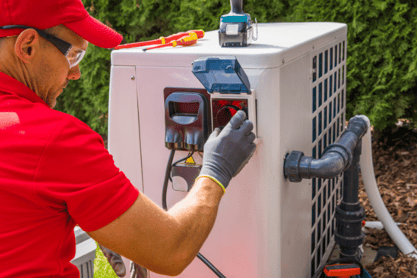 The three top air conditioners right now are the Carrier Infinity 21 (26VNA1), the Lennox SL25KCV and the Trane 20 TruComfort, rated at up to 21, 26 and 24 SEER2. What decides your choice is how many hours your air conditioner runs and what a written quote says about your home.
You do not need the top model to end up with a good air conditioner. A 14 or 16 SEER2 system also clears the 13.4 SEER2 federal floor, and the SEER2 comparison shows where the mid-range makes sense. If you want to go deeper on one of these units, read the Carrier Infinity 21 review or the Trane XV20i review.
To see what these units would cost for your house, use the price calculator for an estimate, or schedule a visit and we will look at your home and quote it.
About the author: Richard Coleman has 40 years in the HVAC industry and has spent the last 20 years in residential estimating.