Last updated October 2026.
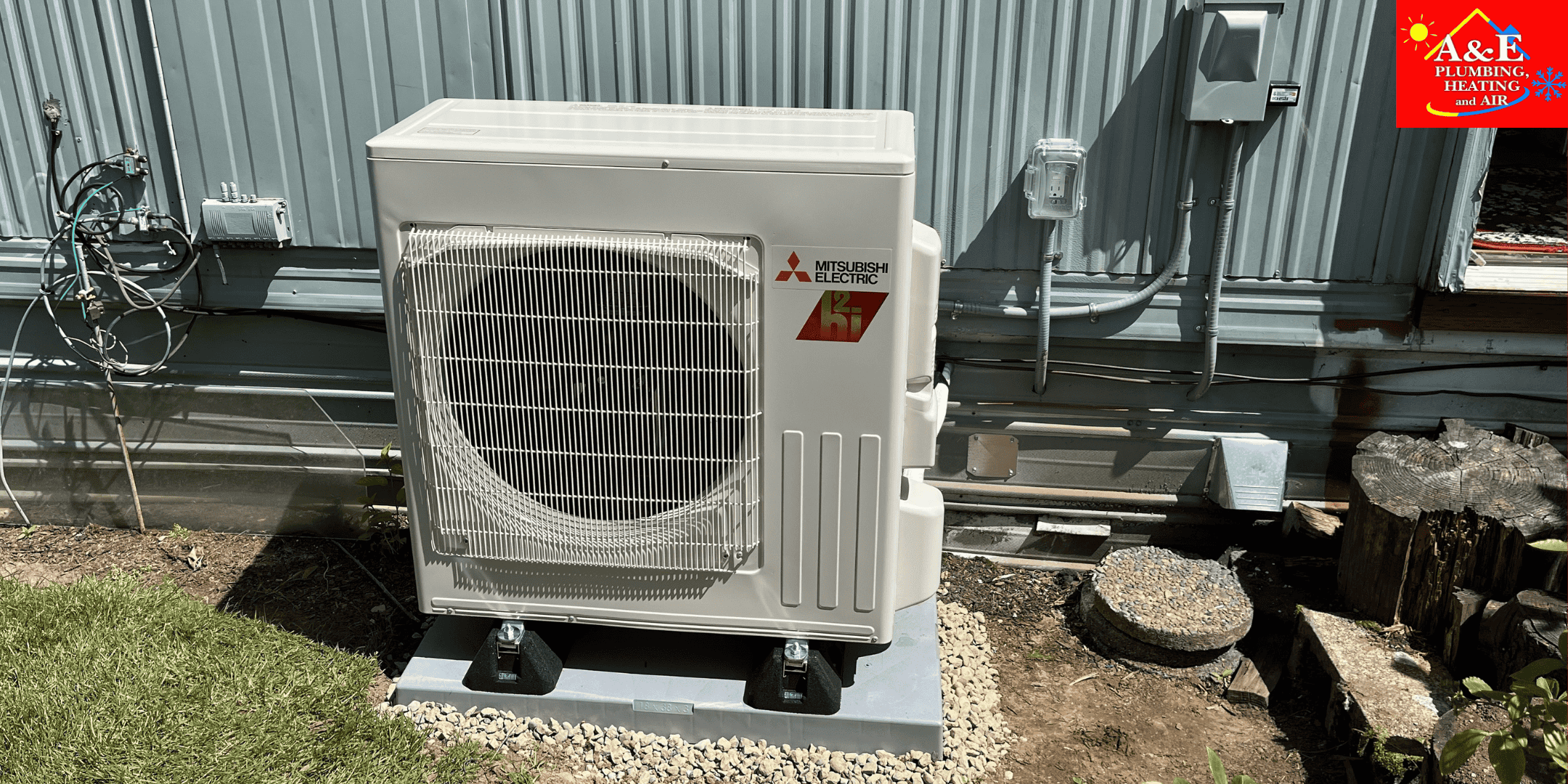
The Mitsubishi Hyper-Heating H2i is the strongest buy if you heat with electric baseboards or an electric furnace, and worth a serious quote if you heat with oil, propane or wood or live where winter nights regularly drop into the teens. The case gets thinner if you already have a working gas furnace in a Portland Metro winter, because you would be buying cold-weather capacity you will rarely use.
The headline number, -13°F, is real, but it is the lowest outdoor temperature the unit will heat at, not the temperature where it still delivers full output. Mitsubishi states up to 100 percent heating capacity at 5°F. At -13°F, NEEP's cold-climate listings show the four current systems we checked making roughly 61 to 82 percent of their rated capacity.
Below you will find the low-temperature numbers the spec sheet leaves out, what drives the price, which incentives still exist in October 2026 (the federal credit is not one of them), and a plain read on who this system fits in the Columbia River Gorge, Gresham and the Portland Metro. A&E installs and services Mitsubishi Hyper-Heating systems across that area, and we would rather you know the limits before you ask for a quote.
Quick Facts: Mitsubishi Hyper-Heating H2i at a Glance
Every number in this table traces to Mitsubishi, NEEP or the IRS. Anything that could not be verified is left out.
| Fact | What it says | Source |
|---|---|---|
| Lowest outdoor temperature for heating, Hyper-Heating (H2i) | -13°F | Mitsubishi Electric Trane |
| Capacity at 5°F, Hyper-Heating (H2i) | Up to 100 percent of heating capacity | Mitsubishi Electric Trane |
| H2i plus (select units) | 100 percent capacity down to -5°F | Mitsubishi Electric Trane |
| Standard SUZ-NL heat pumps (not Hyper-Heating) | Minimum heating operation of -4°F, heating cut-out at -14°F | Mitsubishi Electric Trane |
| Output at -13°F, four current systems | About 61 to 82 percent of rated 47°F capacity | NEEP list, our arithmetic |
| Efficiency (COP) at -13°F, same four systems | About 1.3 to 2.2 | NEEP list |
| Current Hyper-Heating outdoor models | NLHZ model suffix, R-454B refrigerant | Mitsubishi Electric Trane and NEEP list |
| Single-zone SUZ-NLHZ outdoor unit | 9k to 48k BTU/H, up to 19.5 SEER2 | Mitsubishi Electric Trane |
| Federal 25C heat pump tax credit | Not allowed for property placed in service after December 31, 2025 | IRS |
Mitsubishi's -13°F figure tells you where the unit stops heating. It does not tell you how much heat you get on the way down.
Does the Hyper-Heating H2i Really Work at -13°F?
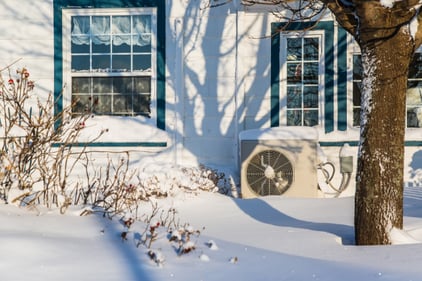 At -13°F the unit runs and heats, but it makes less heat there than it does at 5°F. Mitsubishi says its H2i models heat down to -13°F and produce up to 100 percent of heating capacity at 5°F, and the word to notice is "up to."
NEEP publishes a cold-climate heat pump product list with rated heating output at several outdoor temperatures. Here are four current Hyper-Heating (NLHZ) combinations rated at -13°F, plus the FX line, with the maximum output rating at each temperature. It is a sample and not every model.
| System (outdoor + indoor) | Rated at 47°F (BTU/h) | Max at 5°F (BTU/h, COP) | Max at -13°F (BTU/h, COP) | -13°F as share of rated | HSPF2 Region IV / V |
|---|---|---|---|---|---|
| SUZ-AA09NLHZ + MSZ-EX09NL | 12,000 | 12,000 (2.44) | 7,300 (1.88) | 61% | 10.0 / 7.8 |
| SUZ-AK24NLHZ + SVZ-AP24NL | 28,000 | 23,000 (1.8) | 17,200 (1.34) | 61% | 8.6 / 7.2 |
| PUZ-AK36NLHZ + PLA-AE36NL | 40,000 | 38,000 (2.1) | 32,500 (2.22) | 81% | 9.7 / 7.8 |
| MXZ-3D24NLHZ (multi-zone) | 25,000 | 25,000 (2.02) | 20,400 (2.02) | 82% | 10.0 / 8.2 |
| MUZ-FX12NLHZ + MSZ-FX12NL | 13,200 | 16,200 (2.2) | Rated to -22°F instead: 8,700 (1.8) | Not listed at -13°F | 12.4 / 12.0 |
The percentages are our own arithmetic, the listed -13°F maximum divided by the listed 47°F rated capacity. They are not a Mitsubishi claim, and they apply only to those combinations. Your model and size will land somewhere else, and the FX line shows how far it can vary, because it is listed to -22°F.
COP is the units of heat delivered per unit of electricity used, and electric baseboard heat is 1.0. At -13°F these systems are listed at 1.3 to 2.2, so they still beat baseboard, but the cheap-heat advantage shrinks in the coldest hours. At 5°F the same systems list 1.8 to 2.44.
A standard Mitsubishi heat pump is not helpless in the cold either. Mitsubishi lists a minimum heating operation of -4°F and a cut-out at -14°F for its standard SUZ units, so the idea that ordinary heat pumps give up near freezing overstates it. What Hyper-Heating adds is 9 more degrees of operating range and, per Mitsubishi, up to 100 percent of heating capacity at 5°F. Mitsubishi's pages do not publish a standard unit's output at 5°F, so that comparison stays open. Select units sold as H2i plus list 100 percent capacity down to -5°F, so ask which tier is on your quote.
Size the system for the output it makes on your coldest nights, not for the number on the brochure.
What Does a Hyper-Heating System Cost, and What Drives the Price?
A single installed price for this system does not exist, and any number you see online without a zone count and a duct plan behind it is a guess. Published ranges for Mitsubishi systems disagree with each other by thousands of dollars, which usually means the pages are pricing different jobs.
A&E does not post flat rates, because age, layout, local codes and Gorge weather all change what a job costs. These are the things that move the total:
- Single-zone or multi-zone. One outdoor unit serving one indoor unit is the simplest job. Multi-zone adds indoor units, refrigerant line runs and labor for each room served.
- Ductless or ducted. Ducted systems depend on the condition and layout of your ductwork, and that can add work or save it.
- Capacity. The size comes from your home's heat loss on its coldest days, not from square footage alone.
- Electrical work. The outdoor unit needs the right circuit and disconnect, and an older panel can add to the job.
- What you are replacing. Removing an old furnace, or keeping it as backup, changes both the scope and the plan for the coldest nights.
On running costs, the most recent federal source we could verify is old. The U.S. Department of Energy wrote in a 2017 article that cold climate air-source heat pumps can reduce household energy consumption by up to 40 percent in homes that heat with electric resistance, such as baseboard, or with fuel oil. That is a nine-year-old national figure, not a Gorge one, so treat it as a direction and not a promise.
The right way to price this is a heat-loss calculation for your house, then a written quote for the specific outdoor and indoor models. If the total is the sticking point, A&E's financing page is the next place to look.

Which Incentives Still Exist for a Hyper-Heating Heat Pump in 2026?
The federal credit is gone, and what is left depends on who you are and who supplies your electricity. Here is where each program stood on October 9, 2026.
| Program | What it pays | Where it stands | What to check |
|---|---|---|---|
| Federal 25C tax credit | Nothing for new installs | The IRS says the credit is not allowed for property placed in service after December 31, 2025 | If an article or ad promises it, that page is out of date |
| Oregon Heat Pump Purchase Program | $2,000 per home | Owner-occupied existing homes show $0 left on the page updated October 1, 2026. Rental and new construction funding remains | HSPF2 of 8.1 or greater and SEER2 of 16 or more |
| Energy Trust of Oregon, ductless | $800 for a single-family or manufactured home, $1,800 for an attached home | On the January 2026 information sheet, which says incentives are subject to change | PGE or Pacific Power customer, inverter-driven, HSPF2 of 8.10 or greater, must replace electric resistance heat as the main source |
| Energy Trust of Oregon, ducted | $1,000 for a single-family or manufactured home, $3,000 for an attached home | Same sheet, same caveat | HSPF2 of 7.50 or greater, must replace an electric forced air furnace |
| Oregon HOMES and HEAR rebates | None published | ODOE says no rebates are available at this time | Check the page again before you plan around it |
| Washington HEAR | Varies by local administrator, income-qualified | Klickitat PUD 1 and the City of Vancouver have received state awards. Whether they are taking applications is unconfirmed | The state says it will post each administrator's contact information as contracts are finalized |
Energy Trust also lists higher regional promotions for qualifying regions. Which utility serves your address, and whether it falls in a qualifying region, is something to confirm with Energy Trust before you count on any of these amounts.
Programs also set minimum HSPF2 ratings, and NEEP lists HSPF2 for the same system by climate region. The five systems in the table above list between 8.6 and 12.4 in Region IV and between 7.2 and 12.0 in Region V. The Oregon and Energy Trust pages state a minimum without naming a region in the text we read, so give your contractor the exact model numbers and have them check the AHRI rating against the program before you sign.
Count on the Energy Trust amounts only after Energy Trust confirms your address and your utility, and do not count on the federal credit at all.
Free, takes about a minute, no account needed. It estimates a system for your home, so treat it as a starting point and not a Hyper-Heating quote.
Where Hyper-Heating Falls Short
The drawbacks are a real drop in output in deep cold, thin incentives for most owners, and a tight dependence on sizing.
- Output falls as it gets colder. The four systems rated at -13°F above make roughly 61 to 82 percent of rated capacity. An undersized unit will fall behind first on the coldest nights.
- Efficiency falls too. At -13°F the listed COP is 1.3 to 2.2, against 1.8 to 2.44 at 5°F, which is closer to the 1.0 of baseboard heat.
- The limit is a limit. Mitsubishi's stated range ends at -13°F, so ask your installer what the plan is on a night that cold, including whether to keep existing heat as backup.
- It runs on electricity. A power outage stops it. If outages worry you, A&E also installs whole-home generators.
- You may be paying for range you will not use. If your quote prices Hyper-Heating above a standard model, ask what the extra buys you at your address's actual temperatures.
None of these is a reason to rule it out. They are the questions a good quote should already answer.
How Cold Does It Get in the Gorge and Portland Metro?
 Hood River averages 8.0 days a year with a low at or below 20°F, while Portland's airport averages 1.3, and that gap decides where Hyper-Heating earns its keep.
| NOAA station (1991-2020 normals) | Heating degree days per year | Days per year with a low at or below 20°F | Lowest daily minimum in the station file |
|---|---|---|---|
| Hood River Experiment Station | 5,411.7 | 8.0 | -21°F (February 3, 1950) |
| Troutdale (a nearby station for Gresham) | 4,574.4 | 3.3 | Not reported here |
| Portland International Airport | 4,103.6 | 1.3 | -3°F (February 2, 1950) |
Gresham has no NOAA normals station of its own, so Troutdale, about five miles away, stands in for it. The record lows come from daily files that start in 1940. Hood River runs about 32 percent more heating degree days than Portland's airport and about six times as many days at or below 20°F, by simple division of those figures.
The January 2024 Arctic outbreak shows what a bad week looks like. Between January 13 and 17, Hood River's station recorded lows of 5°F on the 14th and -1°F on the 16th and 17th, while Portland's airport bottomed out at 15°F on the 13th. The National Weather Service in Portland wrote on January 19 that the Columbia River Gorge and Hood River Valley remained encased in snow and ice. The same discussion described an easterly wind corridor across Gresham and east Portland as the coldest part of the Portland metro that morning.
Even that week stayed 12 degrees above the -13°F limit in Hood River. It did go below the 5°F point where Mitsubishi's 100 percent figure applies, and that is the part of the range where sizing matters. Hood River averages just 0.2 days a year at or below 0°F, so for a Gorge home the question is less whether it will run at -13°F and more how much heat it makes on the eight or so nights a year at 20°F or colder.
What you heat with now matters as much as the weather. In the Census Bureau's 2020 to 2024 American Community Survey, electricity is the fuel most used to heat the home for 55.4 percent of homes in Hood River County, 54.7 percent in Gresham, 57.0 percent in Klickitat County and 55.9 percent in Skamania County. The survey does not separate electric resistance from electric heat pumps, so there is no way to say how many of those homes are on baseboards or electric furnaces. Wood heats 15.8 percent of Klickitat County homes and 19.3 percent of Skamania County homes, and propane, oil and wood together heat 11.5 percent of Hood River County homes. Gresham looks more like Portland, with utility gas heating 42.6 percent of homes.
A&E works across the Gorge, Gresham, the Portland Metro and southern Washington. You can see where on the Oregon service area and Washington service area pages, or go straight to the Hood River and Gresham pages. The full list of HVAC services covers installs, repairs and maintenance.
Gorge homes are most likely to use what Hyper-Heating is built for. Portland and Gresham homes should ask whether a correctly sized standard model covers the same winters.
Who Should Buy the Hyper-Heating H2i, and Who Should Price a Standard Model?
It depends mostly on what you heat with now and how cold your address gets.
| Your situation | Verdict | Why |
|---|---|---|
| Electric baseboard or electric furnace | Strongest case | The 2017 DOE figure of up to 40 percent less energy is for electric resistance and oil heat, and Energy Trust's ductless and ducted incentives are written for replacing electric resistance heat and electric furnaces. |
| Oil, propane or wood, most common in the Gorge and Washington | Worth a quote | The DOE figure names fuel oil, and your own fuel price decides the rest. Propane, oil and wood together heat 11.5 percent of Hood River County homes, 22.5 percent in Klickitat County and 29.5 percent in Skamania County (sums of the ACS rows). |
| Gas furnace in Gresham or Portland | The toughest case | There is no sourced operating-cost number for your address. A Hyper-Heating system also cools, so it can replace an air conditioner, which can tip the math if that unit is near the end of its life. |
| Mild winters and a tight budget | Price a standard model first | Mitsubishi lists standard units down to -4°F, and Portland's airport averages 1.3 days a year at or below 20°F. |
Match the system to the house you have, not to the biggest number on the page.
Mitsubishi Hyper-Heating H2i Questions Buyers Ask
What is the lowest temperature the Mitsubishi Hyper-Heating H2i will heat at?
Mitsubishi lists heating down to -13°F, with up to 100 percent of heating capacity at 5°F. Select units sold as H2i plus list 100 percent capacity down to -5°F. Below those points output drops, and NEEP's listings for four current systems show roughly 61 to 82 percent of rated capacity at -13°F.
Is H2i still the current name for Mitsubishi's Hyper-Heating line?
Hyper-Heating INVERTER, shortened to H2i, is still the name on Mitsubishi's current heat pump pages. Current Hyper-Heating outdoor units carry an NLHZ model suffix and use R-454B refrigerant. H2i plus is a tier for select units, and M-Series and P-Series are series names rather than replacements.
Can I still get the federal tax credit for a heat pump?
The federal 25C credit ended for property placed in service after December 31, 2025, according to the IRS. A heat pump installed now does not qualify, so any article or ad that promises it is out of date. Oregon and utility incentives still exist for some buyers and are covered above.
Do I still need backup heat with a Hyper-Heating system?
That depends on your home's heat loss and the size of the system. Mitsubishi gives -13°F as the lowest outdoor temperature for heating, and output falls as the air gets colder. Ask your installer to show the heat-loss calculation and to explain the plan for a night colder than the unit's limit.
How much does a Mitsubishi Hyper-Heating system cost installed?
The total depends on whether the system is single-zone or multi-zone, ductless or ducted, how much capacity your home needs, and how much electrical work the job requires. Online ranges disagree by thousands of dollars, so treat any number without those details as a guess. A&E gives a written price after looking at your home.
Is Hyper-Heating worth it in Portland or Gresham?
It depends on what you heat with now. Portland's airport averages 1.3 days a year with a low at or below 20°F, so a correctly sized standard model may cover many Portland Metro homes, and it is worth pricing alongside Hyper-Heating. The stronger case is replacing electric resistance, oil or wood heat, or living somewhere colder like Hood River, which averages 8.0 days a year at or below 20°F.
What warranty comes with a Mitsubishi Hyper-Heating system?
Mitsubishi's warranty page is headlined as a 12 year parts and compressor warranty. The conditions, including any registration requirement, are in separate limited warranty statements that differ by series and effective date. Ask for the statement that applies to your exact model, in writing, before you sign.
Is the Mitsubishi Hyper-Heating H2i Worth It?
 It is worth it when your home is cold enough, and expensive enough to heat today, to use what it was built for. That describes electric baseboard and electric furnace homes, oil and wood homes, and Gorge addresses where the thermometer reaches the teens several nights a year. In a Portland Metro home with a working gas furnace the case is closer, and a correctly sized standard model belongs in the quote beside it.
Replacing a heating system is a large purchase, and wanting real numbers before you talk to anyone is reasonable. Everything above is sourced, and the pieces we could not confirm are called out as open questions instead of being filled in with a guess.
If you want to go deeper before you call, these pages cover the rest:
- What Hyper-Heat is and how it works explains the inverter compressor and how it differs from a standard heat pump.
- The Hyper-Heat installation guide walks through the home load assessment, sizing and what happens on installation day.
- Hyper-Heat compared with other heating options sets it against standard heat pumps, furnaces and boilers.
- The Hyper-Heating H2i series review covers ductless and ducted configurations in more detail.
When you are ready for numbers on your own house, schedule a service call and tell us you are comparing heating systems. Bring last winter's heating bills if you can, since they say more about your home than any brochure does.

Topics: